
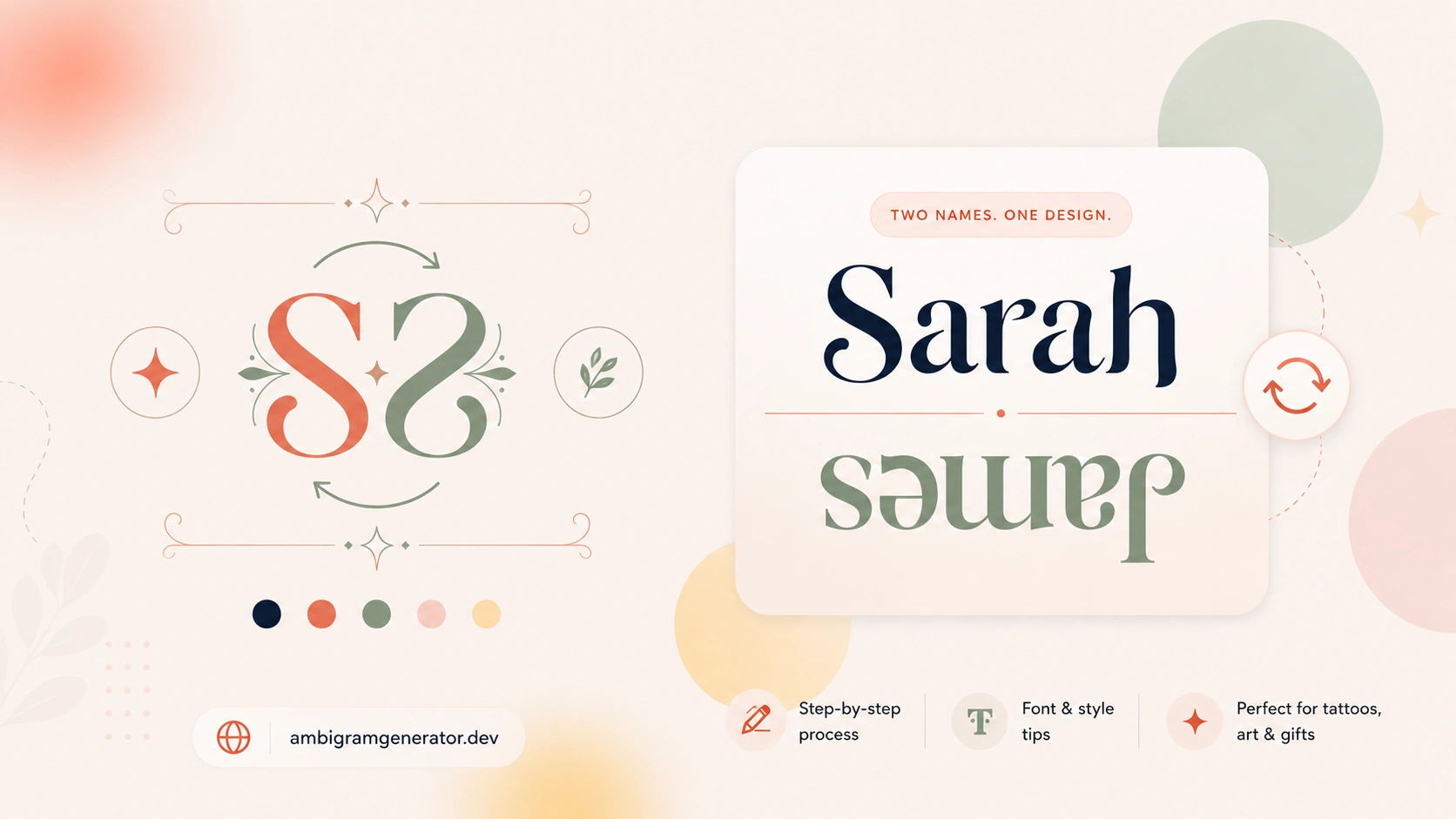
Combining two names into a single piece of word art is one of the most requested styles in ambigram design. It is personal, symbolic, and instantly recognizable once you see it done well. Whether you want it for a couples tattoo, a wedding gift, or a design project, learning how to make an ambigram with two names does not require a background in graphic design. It requires patience, a good eye for letter shapes, and a clear process to follow.
This guide breaks down exactly how two name ambigrams work, the steps involved in building one, and the small details that separate a clean result from a messy one.
What Is a Two Name Ambigram?
A two name ambigram, sometimes called a symbiotogram, is a design where one name is visible in its normal position and a second name appears when the design is flipped, rotated, or viewed from another angle. Instead of a single word reading the same both ways, two different names share one visual structure.
This is different from a standard ambigram, which usually reworks a single word so it reads the same after a rotation. A two name version has to make the letters of one name double as the letters of another, which is a more advanced puzzle.
Why People Create Ambigrams With Two Names
Two name ambigrams are popular because they carry meaning beyond decoration. Common reasons people create them include:
- Couples wanting a shared tattoo that connects both of their names
- Parents merging their children’s names into one keepsake design
- Friends or siblings creating a symbolic piece of art together
- Designers exploring logo concepts built from two brand words
- Anniversary or wedding gifts that hide a second name inside the first
Because the result feels personal and a little surprising when flipped, it tends to hold more emotional value than a plain typographic design.
Step by Step: How to Make an Ambigram With Two Names
1. Choose the Right Two Names
Not every pair of names works equally well. Names with a similar letter count and comparable shapes are far easier to blend. If the names are very different in length, the design usually needs extra spacing tricks or a heavier style to balance it out.
2. Study the Letters Closely
Look at each letter and ask what it could become when turned upside down or mirrored. Certain letters naturally transform into others:
- An “n” can rotate into a “u”
- A “w” often becomes an “m”
- An “s” can flip into another “s”
- An “o” stays an “o” from almost any angle
Mapping these relationships early saves a lot of trial and error later.
3. Sketch the Rotational Structure
Before jumping into a finished design, rough sketches help. Write one name normally, then write the second name upside down directly underneath or overlapping it. This lets you see where letters naturally line up and where you will need to adjust stroke width, spacing, or angle to make both names readable.
4. Choose a Style That Supports the Illusion
Thin, minimal fonts rarely hide the transformation well. Bolder, more decorative styles tend to work better for two name ambigrams because the extra weight and flourish can disguise where one letter blends into another.
5. Preview, Compare, and Adjust
Very few two name ambigrams look perfect on the first attempt. Try more than one style, test different letter spacing, and compare a few variations side by side. If a design feels hard to read, changing the order of the names or slightly shortening one of them can make a noticeable difference.
6. Refine the Final Version
Once you find a version that reads clearly in both directions, clean up the line work, balance the spacing, and finalize the design for its intended use, whether that is a tattoo outline, a printed gift, or a digital file.
Which Name Pairs Tend to Work Best
Some name combinations naturally lend themselves to ambigram design because of shared letters or balanced shapes. Here is a quick reference table.
| Name Pair | Why It Works Well | Difficulty Level |
| Ava and Eva | Share the letters “v” and “a” | Easy |
| Liam and Noah | Similar letter count and rounded shapes | Moderate |
| Anna and Otto | Both names are naturally symmetrical | Easy |
| Sara and Maya | Similar length with soft curves | Moderate |
| Tim and Jim | Share the “im” ending for overlap | Easy |
| Martin and Kristine | Very different letter counts | Advanced |
Names that are naturally symmetrical or share several letters, such as Anna or Otto, are the easiest starting point for beginners. Longer or uneven pairs are still possible, but they usually need more adjustment and a few extra rounds of testing.
Common Mistakes to Avoid
- Picking two names with wildly different lengths without adjusting spacing
- Using a thin font that exposes every transition point
- Rushing the sketch stage and going straight to a finished design
- Ignoring how the design looks upside down until the very end
- Trying to force letters that simply do not share a compatible shape
Avoiding these issues early usually saves several rounds of rework.
Tips for Getting a Cleaner Result
- Start with short names before attempting longer combinations
- Test at least two or three style presets before settling on one
- Ask someone unfamiliar with the design to read it cold, in both directions
- Keep a simple reference sheet of which letters transform into which
- Be patient. Even experienced designers rarely land on the best version first
Frequently Asked Questions
Can any two names be turned into an ambigram?
Not perfectly. Some pairs are naturally easier because of shared letters or similar lengths, while others require more creative spacing and a heavier style to read clearly.
What is a two name ambigram called?
It is often referred to as a symbiotogram, a design that reads as one name in one orientation and a second name when flipped or rotated.
Do the two names need to be the same length?
No, but similar lengths usually produce a cleaner and more balanced result. Names with very different letter counts can still work with extra adjustment.
Is this style only used for tattoos?
No. While tattoos are a common use, two name ambigrams also appear in wedding stationery, personalized gifts, logos, and digital art.
Do I need design experience to try this myself?
Not necessarily. A basic understanding of letter shapes and some patience for testing variations is usually enough to get a workable concept started.
Final Thoughts
Learning how to make an ambigram with two names is really about understanding letter shapes and being willing to test a few variations before settling on the right one. Once you know which letters transform well and which name pairs are naturally balanced, the process becomes much faster.
If you want to skip the manual sketching and see how your own two names might look together, ambigram generator has a dedicated two word ambigram generator built specifically for paired names. It lets you type in both names, preview different style presets, and compare results instantly, which makes it a handy way to explore ideas before committing to a final tattoo or keepsake design.